

Prof. Dr. Christopher Mutschler has been a Full Professor at the University of Technology Nuremberg (UTN) since 2026 and heads the Machine Learning and Positioning Systems research group. At the same time, he is also Division Director for “Positioning and Networks” at Fraunhofer IIS in Nürnberg. His work combines fundamental research in the field of machine learning with the design and deployment of real-world wireless systems.
His research focuses on reinforcement learning and machine learning methods for wireless communications, with particular emphasis on wireless sensing and positioning. He investigates how learning-based approaches can enable adaptive, robust, and efficient wireless systems, especially in complex and dynamic environments. Prof. Mutschler combines methodological advances in learning and signal processing with application-oriented challenges to develop algorithms and systems that are not only theoretically sound but also scalable and deployable in real-world scenarios. His work has contributed to advancing intelligent wireless sensing, localization, and networked systems, often in close collaboration with industry and interdisciplinary partners. His research has resulted in more than 30 granted patent families.
Prof. Mutschler has co-authored more than 100 peer-reviewed publications and has received several best paper and live demonstration awards. He is actively engaged in the scientific community and is a member of the ELLIS (European Laboratory for Learning and Intelligent Systems) network. Prof. Mutschler serves as an Action Editor for Transactions on Machine Learning Research (TMLR) and as an Area Chair for NeurIPS and ICLR, and he is a regular reviewer for premier machine learning conferences, including ICML, RLC and more, for which he has repeatedly received outstanding reviewer awards.
Publications
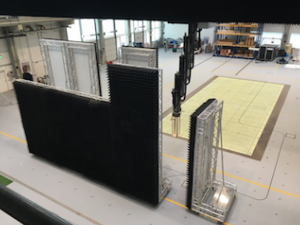
Convolutional Neural Networks for Position Estimation in TDoA-based Locating Systems
We propose a signal processing method that uses deep learning to estimate the absolute tag position directly from the raw channel impulse response (CIR) data. We use the CIR together with ground truth positional data to train a convolutional neural network (CNN) that not only estimates non-linearities in the signal propagation space but also analyzes the signal for multipath effects. Our evaluation shows that our position estimation works in multipath environments and also outperforms classical signal processing in line-of-sight situations.

Evaluation Criteria for Inside-Out Indoor Positioning Systems based on Machine Learning
This paper proposes evaluation criteria that consider algorithmic properties of ML-based positioning schemes and introduces a dataset from an indoor warehouse scenario to evaluate for them. Our dataset consists of images labeled with millimeter precise positions that allows for a better development and performance evaluation of learning algorithms. This allows an evaluation of machine learning algorithms for monocular optical positioning in a realistic indoor position application for the first time. We also show the feasibility of ML-based positioning schemes for an industrial deployment.
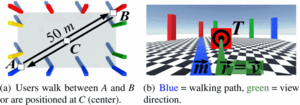
Head-to-Body-Pose Classification in No-Pose VR Tracking Systems
Pose tracking does not yet reliably work in large-scale interactive multi-user VR. Our novel head orientation estimation combines a single inertial sensor located at the user’s head with inaccurate positional tracking. We exploit that users tend to walk in their viewing direction and classify head and body motion to estimate heading drift. This enables low-cost long-time stable head orientation. We evaluate our method and show that we sustain immersion.
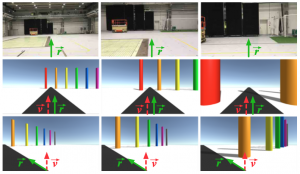
Human Compensation Strategies for Orientation Drifts
This paper studies the effects of head orientation drift around the yaw axis on the user’s absolute head and body orientations when walking naturally in the VR. We study how much drift accumulates over time, how a user experiences and tolerates it, and how a user applies strategies to compensate for larger drifts.
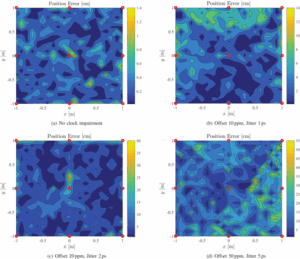
Indoor Positioning using OFDM-based Visible Light Communications Systems
We propose a novel positioning system which uses the entities of visible light communication (VLC) system as anchors and tags. Our technique scales with the number of tags and the VLC network provides both positioning and communication capabilities. The anchor points transmit the OFDM-based VLC signals synchronously, and we estimate the time differences of arrival between anchor points and tags using positioning reference signals embedded into the air-interface of the VLC system. Simulation results show that positioning accuracy of 10 cm or better is possible for over 95% of users if the sampling clock offset is better that 10 ppm, clock jitter is below 1 ps, and a bit resolution of at least 16 bits is available.
Recurrent Neural Networks on Drifting Time-of-Flight Measurements
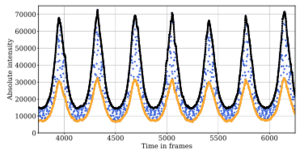
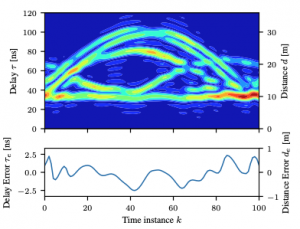
We train recurrent neural networks on ToFs both in simulation and reality that successfully processes noisy measurements that are not zero-mean Gaussian distributed. We show that our methods outperforms conventional methods based on Kalman filters that are currently considered to be state of the art.
Simulation-based Evaluation and Optimization of Control Strategies in Buildings
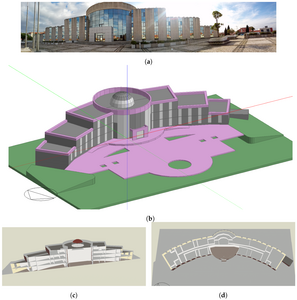
We propose a methodology for building control. A central part of our methodology is the control improvement (or optimisation) module, facilitating two simulation-based control improvement methodologies: one based in multi-criteria decision analysis methods and the other based on state-space identification of dynamical systems using Gaussian process models and reinforcement learning. We evaluate the proposed methodology in a set of simulation-based experiments using the thermal simulation model of a real building located in Portugal.
Super-Resolution in RSS-based Direction-of-Arrival Estimation
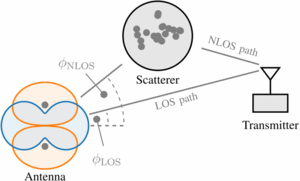
In this paper, a subspace-based approach to frequency-domain multipath resolution is presented. Resolution of multipath components allows for a RSS-based DOA estimation considering the power of the line of sight (LOS) component only. The impact of the multipath channel is considerably reduced with our approach. In contrast to common broadband DOA estimation techniques, the presented approach does not need phase-coherent receive channels or a synchronized sensor network. Hence, the proposed super-resolution technique is applicable to low-power sensor networks and brings accurate positioning to small-sized and energy-efficient sensor nodes.
Supervised Learning for Yaw Orientation Estimation
Our novel yaw orientation estimation combines a single inertial sensor located at the human’s head with inaccurate positional tracking. We exploit that humans tend to walk in their viewing direction and that they also tolerate some orientation drift. We classify head and body motion and estimate heading drift to enable low-cost long-time stable head orientation in NP tracking on 100 m×100 m. Our evaluation shows that we estimate heading reasonably well.
Acoustical Manipulation for Redirected Walking
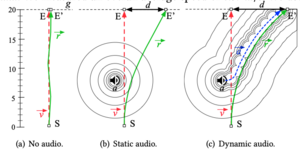
Redirected Walking (RDW) manipulates a scene that is displayed to VR users so that they unknowingly compensate for scene motion and can thus explore a large virtual world on a limited space. So far, mostly visual manipulation techniques have been studied.
This paper shows that users can also be manipulated by means of acoustical signals. In an experiment with a dynamically moving audio source we see deviations of up to 30% from a 20 m long straight-line walk for male participants and of up to 25% for females. Static audio has about two thirds of this impact.
Social Augmentations in Multi-User Virtual Reality: A Virtual Museum Experience
This work in progress report demonstrates a novel approach for behavioral augmentations in Virtual Reality (VR). Using a large scale tracking system, groups of five users explored a virtual museum. We investigated how augmenting social interactions impacts this experience, by designing behavioral transformations for behavioral phenomena in social interactions. Preliminary data indicate a reduction of perceived isolation, and a more thought-provoking experience with active behavioral augmentations.
Inter-Satellite Ranging in the Low Earth Orbit
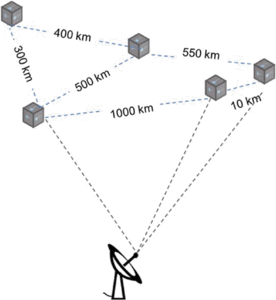
Many satellite systems require knowledge about inter-satellite distances. Inter-satellite links provide direct connectivity between satellites and may be used for ranging, while they remove the need of dedicated hardware. This paper addresses inter-satellite ranging at the Low Earth Orbit (LEO) using S-Band signals. We take the requirements from recent missions and future applications into account and analyze the factors that limit ranging. We show how these factors affect the quality of distance estimation in terms of the Cramér-Rao Lower Bound for ranging. Two-way-ranging (TWR) provides the best accuracy and sustains the low-cost objective of small satellites. We further propose an enhanced TWR message exchange that enables on-the-fly delay calibration and sub-sample corrections. We implemented the transceiver modules on a Software-Defined Radio (SDR) platform and evaluated them with real-world data. The results show that the proposed ranging algorithm achieves an accuracy of few centimeters.
Low-Complexity PDoA-based Localization
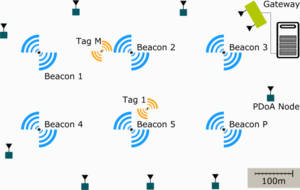
We present a concept for energy-efficient low-complexity localization based on Phase Difference of Arrival (PDoA). Besides a novel method for reference transmitter selection we propose a waveform, well-suited for PDoA measurements, and evaluate its ranging performance. We compare multiple signal classification (MUSIC), linear fitting, and mean phase difference and compare their estimation variance to the Cramer Rao Lower Bound (CRLB). Our system concept allows for the mitigation of near-far effects for reference and tag signals at the receiver nodes, and an efficient implementation of a wideband frequency hopping scheme.
Virtual and Augmented Reality in Sports: An Overview and Acceptance Study
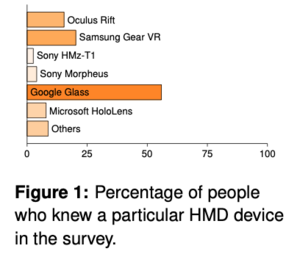
We conducted an online survey among 227 athletes about the acceptance of virtual reality headsets for training in different kind of sport disciplines.
Adaptive Speculative Processing of Out-of-Order Event Streams
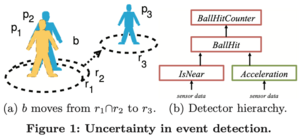
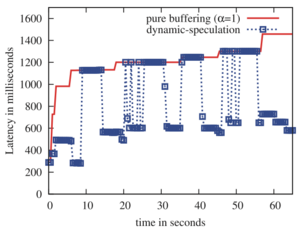
We present an adaptive speculative processing technique for out-of-order event streams that enhances typical buffering approaches. Our novel technique encapsulates the event detector, uses the buffering technique to delay events but also speculatively processes a portion of it, and adapts the degree of speculation at runtime to fit the available system resources so that detection latency becomes minimal. Our technique outperforms known approaches on both synthetical data and real sensor data from a realtime locating system (RTLS) with several thousands of out-of-order sensor events per second. Speculative buffering exploits system resources and reduces latency by 40% on average.
Predictive Load Management in Smart Grid Environments
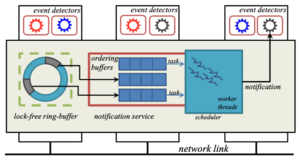
The DEBS 2014 Grand Challenge targets the monitoring and prediction of energy loads of smart plugs installed in private households. This paper presents details of our middleware solution and efficient median calculation, shows how we address data quality issues, and provides insights into our enhanced prediction based on hidden Markov models.
The evaluation on the smart grid data set shows that we process up to 244k input events per second with an average detection latency of only 13.3ms, and that our system efficiently scales across nodes to increase throughput. Our prediction model significantly outperforms the median-based prediction as it deviates much less from the real load values, and as it consumes considerably less memory.
Distributed Low-Latency Out-of-Order Event Processing for High Data Rate Sensor Streams
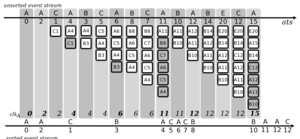
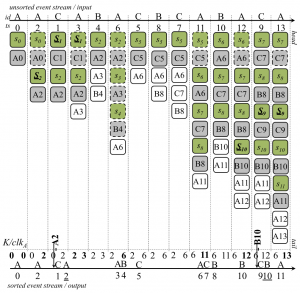
We present a low-latency approach based on K-slack that achieves ordered event processing on high data rate sensor and event streams without a-priori knowledge. Slack buffers are dynamically adjusted to fit the disorder in the streams without using local or global clocks. The middleware transparently reorders the event input streams so that events can still be aggregated and processed to a granularity that satisfies the demands of the application. On a Realtime Locating System (RTLS) our system performs accurate low-latency event detection under the predominance of out-of-order event arrival and with a close to linear performance scale-up when the system is distributed over several threads and machines.
Reliable Speculative Processing of Out-of-Order Event Streams in Generic Publish/Subscribe Middlewares
This paper presents a speculative processing technique for out-of-order event streams that enhances typical buffering approaches. We use a buffering technique to delay events but also speculatively processes a portion of it, and adapt the degree of speculation at runtime to fit the available system resources so that detection latency becomes minimal.
Our technique outperforms known approaches on both synthetical data and real sensor data from a Realtime Locating System (RTLS) with several thousands of out-of-order sensor events per second. Speculative buffering exploits system resources and reduces latency by 40% on average.
Runtime Migration of Stateful Event Detectors with Low-Latency Ordering Constraints
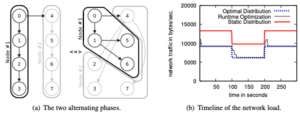
This paper presents a safe runtime migration of stateful event detectors that respects low-latency time-constraints and seamlessly orders input events correctly on the migrated host. Event streams are only forwarded until timing delays are properly calibrated, the migrated event detector immediately stops processing after its state is transferred, and the processing overhead is negligible. On a Realtime Locating System (RTLS) we show that we can efficiently migrate event detectors at runtime between servers where other techniques would fail.

The DEBS 2013 Grand Challenge
The 2013 edition of the Grand Challenge focuses on real-time, event-based sports analytics. The 2013 Grand Challenge data set was collected during a football match carried out at a Nuremberg Stadium in Germany and is complemented with a set of continuous analytical queries which provide detailed insight into the match statistics for both team managers and spectators.