

Prof. Dr. Christopher Mutschler has been a Full Professor at the University of Technology Nuremberg (UTN) since 2026 and heads the Machine Learning and Positioning Systems research group. At the same time, he is also Division Director for “Positioning and Networks” at Fraunhofer IIS in Nürnberg. His work combines fundamental research in the field of machine learning with the design and deployment of real-world wireless systems.
His research focuses on reinforcement learning and machine learning methods for wireless communications, with particular emphasis on wireless sensing and positioning. He investigates how learning-based approaches can enable adaptive, robust, and efficient wireless systems, especially in complex and dynamic environments. Prof. Mutschler combines methodological advances in learning and signal processing with application-oriented challenges to develop algorithms and systems that are not only theoretically sound but also scalable and deployable in real-world scenarios. His work has contributed to advancing intelligent wireless sensing, localization, and networked systems, often in close collaboration with industry and interdisciplinary partners. His research has resulted in more than 30 granted patent families.
Prof. Mutschler has co-authored more than 100 peer-reviewed publications and has received several best paper and live demonstration awards. He is actively engaged in the scientific community and is a member of the ELLIS (European Laboratory for Learning and Intelligent Systems) network. Prof. Mutschler serves as an Action Editor for Transactions on Machine Learning Research (TMLR) and as an Area Chair for NeurIPS and ICLR, and he is a regular reviewer for premier machine learning conferences, including ICML, RLC and more, for which he has repeatedly received outstanding reviewer awards.
Publications
Transfer Learning to adapt 5G AI-based Fingerprint Localization across Environments
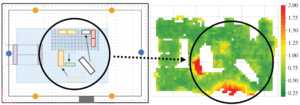
We propose a transfer learning (TL) method that exploits realistic synthetic Channel State Information (CSI) obtained with the Quasi Deterministic Radio channel Generator (QuaDRiGa), used to pre-train the CNN-based fingerprint model so that it can be adapted to any real (NLoS) propagation scenario with a low number of real training samples. Our experiments show that the positioning accuracy using fine-tuning improves by 37% in changed and by 19% in new environments.

Uncertainty-aware Evaluation of Time-Series Classification for Online Handwriting Recognition with Domain Shift
In this paper, we focus on models for online handwriting recognition, one particular type of spatio-temporal data. The data is observed from a sensor-enhanced pen with the goal to classify written characters. We conduct a broad evaluation of aleatoric (data) and epistemic (model) UQ based on two prominent techniques for Bayesian inference, Stochastic Weight Averaging-Gaussian (SWAG) and Deep Ensembles. Next to a better understanding of the model, UQ techniques can detect out-of-distribution data and domain shifts when combining right-handed and left-handed writers (an underrepresented group).
Uncovering Instabilities in Variational-Quantum Deep Q-Networks
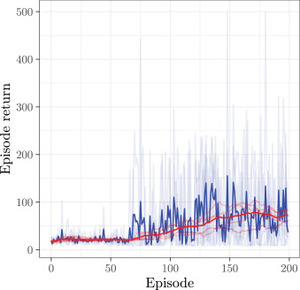
We show that VQ-DQN approaches are subject to instabilities that cause the learned policy to diverge, study the extent to which this afflicts reproducibility of established results based on classical simulation, and perform systematic experiments to identify potential explanations for the observed instabilities. Additionally, we execute RL algorithms on an actual quantum processing unit (an IBM Quantum Device) and investigate differences in behaviour between simulated and physical quantum systems that suffer from implementation deficiencies. Our experiments show that it cannot be conclusively decided if known quantum approaches, even if simulated without physical imperfections, can provide an advantage as compared to classical approaches.

Accuracy-Aware Compression of Channel Impulse Responses using Deep Learning
We evaluate multiple neural network architectures containing encoding (compressing) and decoding (reconstructing) components and compare them to the state-of-the-art compression techniques Discrete Cosine Transform (DCT) and Discrete Wavelet Transform (DWT). We show that fully connected autoencoders achieve the lowest error, outperforming both DCT and DWT. Further experiments prove that the reconstructed CSI can be used for positioning with only mild performance deterioration at a compression of >97% and even when trained on a different environment.
Can You Trust Your Autonomous Car? Interpretable and Verifiably Safe Reinforcement Learning
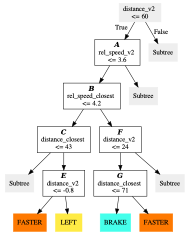
We introduce a novel pipeline that builds on recent advances in imitation learning and that can generate safe and efficient behavior policies. We combine an RL step that solves for safe behavior through the introduction of safety distances with a subsequent innovative safe extraction of decision tree policies. The resulting decision tree is not only easy to interpret, it is also safer than the neural network policy trained for safety. Additionally, we formally prove the safety of trained RL agents for linearized system dynamics, showing that the learned and extracted policy successfully avoids all catastrophic events.
Contact Tracing with the Exposure Notification Framework in the German Corona-Warn-App
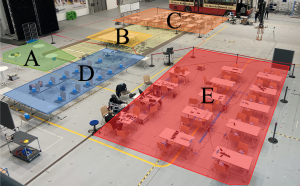
We examined the Google/Apple Exposure Notification Framework (ENF), which in combination with the front-end, i.e., the German Corona-Warn-App (CWA), enables digital CT in Germany. With centimeter accurate optical reference systems we show that optimal parameters are application-specific. However, they cause impractical high resource costs. In contrast, optimized general parameters offer an everyday compromise between energy costs, applicability, accuracy, and reliability of the ENF.
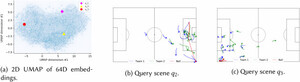
Deep Siamese Metric Learning: A Highly Scalable Approach to Searching Unordered Sets of Trajectories
We present a novel representation learning approach using Siamese Metric Learning that approximates a distance preserving low-dimensional representation and that learns to estimate reasonable solutions to the assignment problem. To this end, we employ a Temporal Convolutional Network architecture that we extend with a gating mechanism to enable learning from sparse data, leading to solutions to the assignment problem exhibiting varying degrees of sparsity.
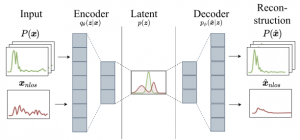
Estimating TOA Reliability with Variational Autoencoders
We propose to use generative deep learning models for out-of-distribution detection based on channel impulse responses (CIRs). We use a Variational Autoencoder (VAE) to predict an anomaly score for the channel of a TOF-based Ultra-wideband (UWB) system. Our experiments show that a VAE trained only on line-of-sight (LOS) training data generalizes well to new environments and detects non-line-of-sight CIRs with an accuracy of 85%. We also show that integrating our anomaly score into a TOF-based extended Kalman filter (EKF) improves tracking performance by over 25%.
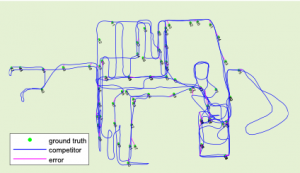
Off-line Evaluation of Indoor Positioning Systems in Different Scenarios: The Experiences from IPIN 2020 Competition
The 2020 IPIN Competition included 5 diverse off-site off-site Tracks, each resembling real use cases and challenges for indoor positioning. The results in terms of participation and accuracy of the proposed systems have been encouraging. The best performing competitors obtained a third quartile of error of 1 m for the Smartphone Track and 0.5 m for the Foot-mounted IMU Track. While not running on physical systems, but only as algorithms, these results represent impressive achievements.
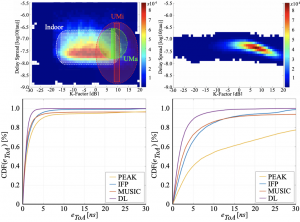
Robust ToA-Estimation using Convolutional Neural Networks on Randomized Channel Models
We propose a 1D Convolutional Neural Network to identify optimal FDPoAs as ToA directly from the raw CSI. We train our model with realistic 5G channel model data synthesized by QuaDRiGa. Metrics such as Delay Spread (DS), k-Factor (kF), and SNR are appropriate to cover most LoS-NLoS constellations. Our approach consistently outperforms the state of the art by about 17% for SNRs below -10 dB.
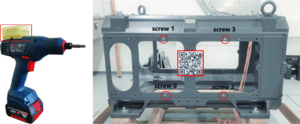
A sense of quality for augmented reality assisted process guidance
We develop a Machine Learning (ML) classifier that predicts quality metrics from a 9-degrees of freedom inertial measurement unit, while we simultaneously guide and track the work processes with a HoloLens AR system. In our user study, 6 test subjects perform typical assembly tasks with our system. We evaluate the tracking accuracy of the system based on a precise optical reference system and evaluate the classification of each work step quality based on the collected ground truth data. Our evaluation shows a tracking accuracy of fast dynamic movements of 4.92mm and our classifier predicts the actions carried out with mean F1 value of 93.8% on average.
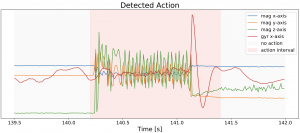
Automated Quality Assurance for Hand-held Tools via Embedded Classification and AutoML
We introduce a process monitoring system that uses inertial, magnetic field and audio sensors that we attach as add-ons to hand-held tools. The sensor data is analyzed via embedded classification algorithms and our system directly provides feedback to workers during the execution of work processes. We outline the special requirements caused by vastly different tools and show how to automatically train and deploy new ML models.
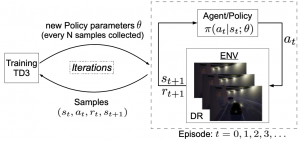
High-Speed Collision Avoidance using Deep Reinforcement Learning and Domain Randomization for Autonomous Vehicles
We use domain randomization to study simulation-to-reality transfer for a high-speed collision avoidance scenario. We train the policy not only on a single version of the setup but on several variations. Our experiments show that the resulting policy is able to generalize much better to different values for the vehicle speed and distance from the obstacle compared to policies trained in the non-randomized version of the setup.
Video: https://download.cmutschler.de/publications/2020/ITSC/0703_VP.mp4
Slides: https://download.cmutschler.de/publications/2020/ITSC/0703_PS.pdf
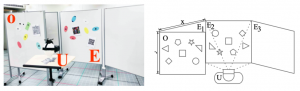
Localization Limitations of ARCore, ARKit, and Hololens in Dynamic Large-Scale Industry Environments
We study the applicability of today’s popular AR systems (Apple ARKit, Google ARCore, and Microsoft Hololens) in an industrial context (large area of 1,600m2, long walking distances of 60m between cubicles, and dynamic environments with volatile natural features). Out of the box, these AR systems are far from useful even for normal motion behavior. They accumulate an average error of about 17m per 120m, with a scaling error of up to 14.4cm/m that is quasi-directly proportional to the path length. By adding natural features, the tracking reliability can be improved, but not enough.
NLOS Detection using UWB Channel Impulse Responses and Convolutional Neural Networks
We apply different convolutional neural network architectures (ResNet, Encoder, FCN) to detect non line-of-sight (NLOS) channel conditions directly from the CIR raw data. A realistic measurement campaign is used to train and evaluate the algorithms. The proposed methods highly outperform the featurebased ML baselines while still using low network complexities. We also show that the models generalize well to unknown receivers and environments and that positioning filters benefit significantly from the identification of NLOS measurements.
Real-time gait reconstruction for virtual reality using a single sensor
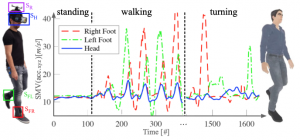
We propose an approach to reconstruct gait motions from a single head-mounted accelerometer. We train our models to map head motions to corresponding ground truth gait phases. To reconstruct leg motion, the models predict gait phases to trigger equivalent synthetic animations. We designed four models: a threshold-based, a correlation-based, a Support Vector Machine (SVM) -based and a bidirectional long-term short-term memory (BLSTM) -based model. Our experiments show that, while the BLSTM approach is the most accurate, only the correlation approach runs on a mobile VR system in real time with sufficient accuracy. Our user study with 21 test subjects examined the effects of our approach on simulator sickness and showed significantly less negative effects on disorientation.
RNN-aided Human Velocity Estimation from a Single IMU
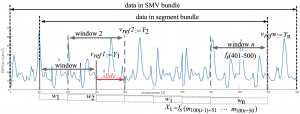
We propose a hybrid filter that combines a convolutional neural network (CNN) and a bidirectional recurrent neural network (BLSTM) (that extract spatial features from the sensor signals and track their temporal relationships) with a linear Kalman filter (LKF) that improves the velocity estimates. Our experiments show the robustness against different movement states and changes in orientation, even in highly dynamic situations. It also generalizes well to different and varying movement speeds and provides accurate and precise velocity estimates.
The OnHW Dataset: Online Handwriting Recognition from IMU-Enhanced Ballpoint Pens with Machine Learning
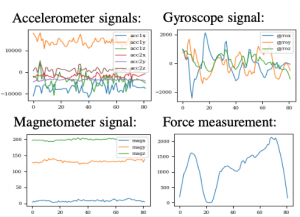
We propose a novel online handwriting dataset acquired from 119 writers consisting of 31,275 uppercase and lowercase English alphabet character recordings (52 classes) as part of the UbiComp 2020 Time Series Classification Challenge. Our novel OnHW-chars dataset allows for the evaluations of uppercase, lowercase and combined classification tasks, on both writer-dependent (WD) and writer-independent (WI) classes and we show that properly tuned machine learning pipelines as well as deep learning classifiers (such as CNNs, LSTMs, and BiLSTMs) yield accuracies up to 90 % for the WD task and 83 % for the WI task for uppercase characters.

ViPR: Visual-Odometry-aided Pose Regression for 6DoF Camera Localization
We propose ViPR, a novel modular architecture for longterm 6DoF VO that leverages temporal information and synergies between absolute pose estimates (from PoseNet-like modules) and relative pose estimates (from FlowNet-based modules) by combining both through recurrent layers. Experiments on known datasets and on our own Industry dataset show that our modular design outperforms state of the art in long-term navigation tasks.

A Bidirectional LSTM for Estimating Dynamic Human Velocities from a Single IMU
We ML/DL to estimate a human velocity. Our approach is robust to varying motion states and orientation changes in dynamic situations. On data from a single un-calibrated IMU, our novel recurrent model not only outperforms the state-of-the-art on instantaneous velocity (≤0.10 m/s) and on traveled distance (≤29 m/km). It can also generalize to different and varying rates of motion and provides accurate and precise velocity estimates.
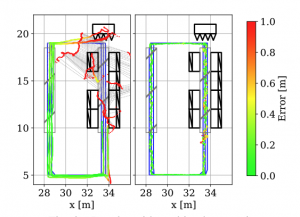
A Deep Learning Approach to Position Estimation from Channel Impulse Responses
We show how deep learning (DL) can be used to estimate the position of mobile objects directly from the raw channel impulse responses (CIR) extracted at the receivers. Our experiments show that our DL-based position estimation not only works well under harsh multipath propagation but also outperforms state-of-the-art approaches in line-of-sight situations.
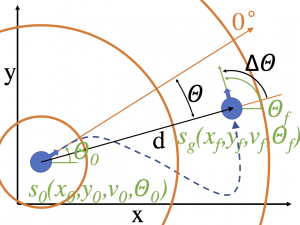
Deep Reinforcement Learning for Motion Planning of Mobile Robots
We present a novel motion and trajectory planning algorithm for nonholonomic mobile robots that uses recent advances in deep reinforcement learning. Starting from a random initial state, i.e., position, velocity and orientation, the robot reaches an arbitrary target state while taking both kinematic and dynamic constraints into account. Our deep reinforcement learning agent not only processes a continuous state space it also executes continuous actions, i.e., the acceleration of wheels and the adaptation of the steering angle. We evaluate our motion and trajectory planning on a mobile robot with a differential drive in a simulation environment.
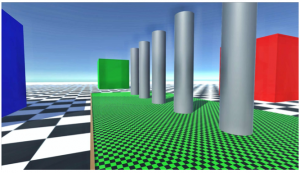
Sick Moves! Motion Parameters as Indicators of Simulator Sickness
We explore motion parameters, more specifically gait parameters, as an objective indicator to assess simulator sickness in Virtual Reality (VR). We used two different camera pose (position and orientation) estimation methods for the evaluation of motion tasks in a large-scale VR environment: a simple model and an optimized model that allows for a more accurate and natural mapping of human senses. The subjective measures from participants confirmed that the optimized pose estimation model reduces simulator sickness and increases the perceived presence. The results further show that both models affect the gait parameters and simulator sickness, which is why we further investigated a classification approach that deals with non-linear correlation dependencies between gait parameters and simulator sickness.
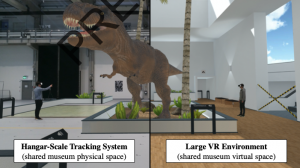
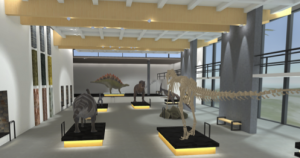
A Location-Based VR Museum
This poster presents a novel type of Virtual Reality (VR) application for education and culture: a location-based VR Museum, which is a large-room scale multi-user multi-zone virtual museum. This VR museum was designed to support over 100 simultaneous users, walking in a large tracking system (600 m2) and sharing a ten times bigger virtual space (7000 m2) containing indoor and outdoor dinosaur exhibitions. This poster is giving an overview of the system and its main features as well as discussing its potential benefits and future evaluation.
Beyond Replication: Augmenting Social Behaviors in Multi-User Virtual Realities
This paper presents a novel approach for the augmentation of social behaviors in virtual reality (VR) and designed three visual transformations for behavioral phenomena crucial to everyday social interactions: eye contact, joint attention, and grouping. We show that our results indicate that our approach can significantly increase social presence in multi-user environments and that the augmented experience appears more thought-provoking.