We introduce Sparse pretrained Radio Transformer (SpaRTran), a hybrid method based on the concept of compressed sensing for wireless channels. SpaRTran builds around a wireless channel model that constrains the optimization procedure to physically meaningful solutions and induces a strong inductive bias, cutting positioning error by up to 28% and increasing top-1 codebook selection accuracy for beamforming by 26 percentage points. Quantum error correction is critical for protecting quantum computations from noise, yet standard protocols demand significant qubit overhead. To address this, we introduce a learning-based approach that allows tailoring encodings to specific noise channels. This approach is based on a novel loss function that maximizes the distinguishability of noisy quantum states. We thereby realize a variational quantum algorithm that discovers new resource-efficient codes, which empirically outperform standard quantum error correction schemes on various noise structures. We furthermore derive promising theoretical properties of these variational quantum error correction (VarQEC) codes and perform proof-of-concept experiments on quantum hardware. In this paper, we investigate this potential advantage by proposing a batch RL algorithm that utilizes variational quantum circuits (VQCs) as function approximators within the discrete batch-constraint deep Q-learning (BCQ) algorithm. Additionally, we introduce a novel data re-uploading scheme by cyclically shifting the order of input variables in the data encoding layers. We evaluate the efficiency of our algorithm on the OpenAI CartPole environment and compare its performance to the classical neural network-based discrete BCQ. The Constrained Markov Decision Process (CMDP) formulation allows to solve safety-critical decision making tasks that are subject to constraints. While CMDPs have been extensively studied in the Reinforcement Learning literature, little attention has been given to sampling-based planning algorithms such as MCTS for solving them. Previous approaches perform conservatively with respect to costs as they avoid constraint violations by using Monte Carlo cost estimates that suffer from high variance. We propose Constrained MCTS (C-MCTS), which estimates cost using a safety critic that is trained with Temporal Difference learning in an offline phase prior to agent deployment. The critic limits exploration by pruning unsafe trajectories within MCTS during deployment. C-MCTS satisfies cost constraints but operates closer to the constraint boundary, achieving higher rewards than previous work. As a nice byproduct, the planner is more efficient w.r.t. planning steps. Most importantly, under model mismatch between the planner and the real world, C-MCTS is less susceptible to cost violations than previous work. Linear systems of equations can be found in various mathematical domains, as well as in the field of machine learning. By employing noisy intermediate-scale quantum devices, variational solvers promise to accelerate finding solutions for large systems. Although there is a wealth of theoretical research on these algorithms, only fragmentary implementations exist. To fill this gap, we have developed the variational-lse-solver framework, which realizes existing approaches in literature, and introduces several enhancements. The user-friendly interface is designed for researchers that work at the abstraction level of identifying and developing end-to-end applications. We implicitly estimate the number of MPCs and achieve subsample accuracy without using computationally intensive super-resolution techniques. Our approach outperforms known methods in detection performance and accuracy at different bandwidths. Our ablation study shows exceptional results on simulated and real datasets and generalizes to unknown radio environments. We propose a few-shot learning (FSL) approach to adapt to new interference classes. Our method employs quadruplet selection for the model to learn representations using various positive and negative interference classes. Furthermore, our quadruplet vari-ant selects pairs based on the aleatoric and epistemic uncertainty to differentiate between similar classes. We recorded a dataset at a motorway with eight interference classes on which our FSL method with quadruplet loss outperforms other FSL techniques in jammer classification accuracy with 97.66%. https://gitlab.cc-asp.fraunhofer.de/darcy_gnsslFIOT_highway. We enhance the performance of SfM and PoseNet in retrieving absolute poses, evaluate PGO to optimize the absolute pose and conduct a benchmark of 25 convolutional, recurrent, and Transformer networks in absolute and relative pose fusion. We introduce a novel gradient estimation approach called Guided-SPSA, which meaningfully combines the parameter-shift rule and SPSA-based gradient approximation. We demonstrate numerically the performance of Guided-SPSA on different paradigms of quantum machine learning, such as regression, classification, and reinforcement learning. We demonstrate the utility of our novel shrinking method by successfully applying it to the archetypical traveling salesperson problem (TSP) which often occurs as a sub-problem in practically relevant vehicle routing applications. For a TSP with seven cities, we are able to retrieve an optimum solution by consecutively running two 7-qubit QAOA circuits. Without decomposition methods, we would require five times as many qubits. Our results offer insights into the performance of algorithms for combinatorial optimization problems within the constraints of current quantum technology. The main contribution of this work is to show a compilation of possible indoor positioning scenarios and different indoor positioning solutions to the same problem. We present a method that enables efficient training of DNNs completely in place on the MCU using fully quantized training (FQT) and dynamic partial gradient updates. We demonstrate the feasibility of our approach on multiple vision and time-series datasets and provide insights into the tradeoff between training accuracy, memory overhead, energy, and latency on real hardware. The results show that compared to related work, our approach requires 34.8% less memory and has a 49.0% lower latency per training sample, with dynamic partial gradient updates allowing a speedup of up to 8.7 compared to fully updating all weights. Circuit cutting, the partitioning of quantum circuits into smaller independent fragments, has become a promising avenue for scaling up current quantum-computing experiments. Here, we introduce a scheme for joint cutting of two-qubit rotation gates based on a virtual gate-teleportation protocol. With that, we significantly lower the previous upper bounds on the sampling overhead and prove the optimality of the scheme. Furthermore, we show that no classical communication between the circuit partitions is required. For parallel two-qubit rotation gates we derive an optimal ancilla-free decomposition, which includes cnot gates as a special case. We develop the qiskit-torch-module, building on the widely used Qiskit software environment. It improves runtime performance by two orders of magnitude over comparable libraries, while facilitating low-overhead integration with existing code-bases. Moreover, the framework provides advanced tools for integrating quantum neural networks with PyTorch. The pipeline is tailored for single-machine compute systems, which constitute a widely employed setup in day-to-day research efforts. We propose a self-supervised learning framework that pre-trains a general transformer (TF) neural network on 5G channel measurements that we collect on-the-fly without expensive equipment. Our novel pretext task randomly masks and drops input information to learn to reconstruct it. So, it implicitly learns the spatiotemporal patterns and information of the propagation environment that enable FP-based localization. Most interestingly, when we optimize this pre-trained model for localization in a given environment, it achieves the accuracy of state-of-the-art methods but requires ten times less reference data and significantly reduces the time from training to operation. We train a graph neural network that produces a probability distribution based on the path from the model’s root to its “to-be-selected” leaves. Representing node-selection as a probability distribution allows us to train a decision-making policy using state-of-the-art RL techniques that capture both intrinsic node-quality and node-evaluation costs. This paper addresses the robustness and generalization of quantum reinforcement learning by combining principles from quantum computing and control theory. Leveraging recent results on robust quantum machine learning, we utilize Lipschitz bounds to propose a regularized version of a quantum policy gradient approach, named the RegQPG algorithm. We show that training with RegQPG improves the robustness and generalization of the resulting policies. Furthermore, we introduce an algorithmic variant that incorporates curriculum learning, which minimizes failures during training. Our findings are validated through numerical experiments, demonstrating the practical benefits of our approach. SCIM MILQ is a scheduler for quantum tasks in HPC infrastructure. It combines well-established scheduling techniques with methods unique to quantum computing, such as circuit cutting. SCIM MILQ can schedule tasks while minimizing the makespan, i.e., the time that elapses from the start of work to the end, improving on average by 25 %. Additionally, it reduces the noise in the circuit by up to 10 %, increasing the outcome’s reliability. We compare it against an existing baseline and show its viability in an HPC environment. In this article, we propose methods for uncertainty estimation of AI-based fingerprinting to determine its spatial boundaries and validity. Our experiments show that we can successfully identify spatial boundaries of the fingerprinting models and detect corrupted areas. In contrast to the state-of-the-art, our approach employs an intrinsic identification through out-of-distribution (OOD) detection, rendering external detection approaches unnecessary.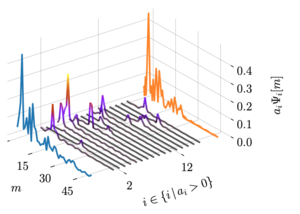
Simplicity is Key: An Unsupervised Pretraining Approach for Sparse Radio Channels
Variational Quantum Error Correction
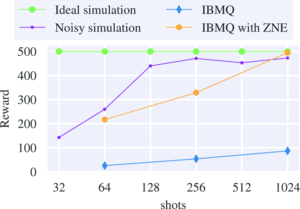
BCQQ: Batch-Constraint Quantum Q-Learning with Cyclic Data Re-uploading
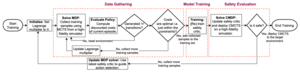
C-MCTS: Safe Planning with Monte Carlo Tree Search
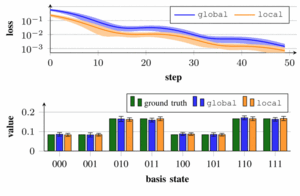
Comprehensive Library of Variational LSE Solvers
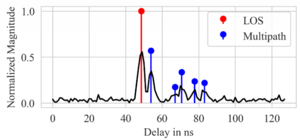
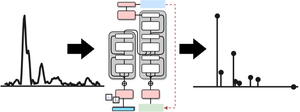
Estimating Multipath Component Delays with Transformer Models
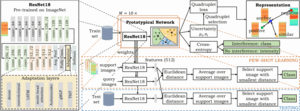
Few-shot learning with uncertainty-based quadruplet selection for interference classification in GNSS data
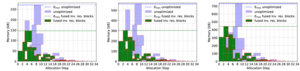
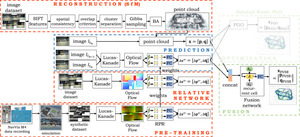
Fusing Structure from Motion and Simulation-augmented Pose Regression from Optical Flow for Challenging Indoor Environments
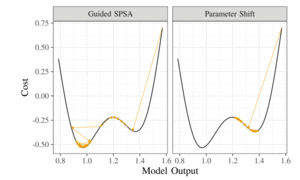
Guided-SPSA: Simultaneous Perturbation Stochastic Approximation assisted by the Parameter Shift Rule
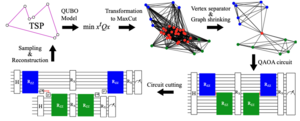
Improving quantum and classical decomposition methods for vehicle routing
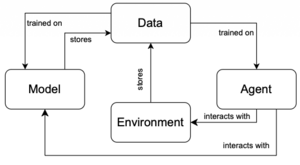
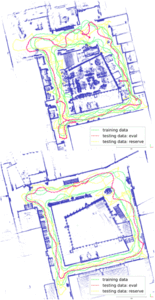
Offsite evaluation of localization systems: criteria, systems and results from IPIN 2021-22 competitions
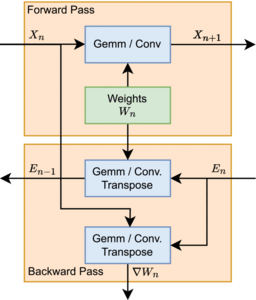
On-Device Training of Fully Quantized Deep Neural Networks on Cortex-M Microcontrollers
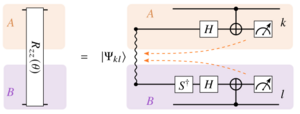
Optimal Joint Cutting of Two-qubit Rotation Gates
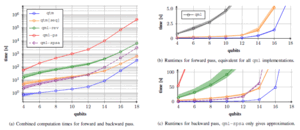
Qiskit-torch-module: Fast prototyping of quantum neural networks
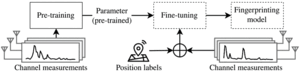
Radio Foundation Models: Pre-training Transformers for 5G-based Indoor Localization
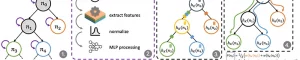
Reinforcement Learning for Node Selection in Branch-and-Bound
Our method induces a high quality node selection policy on a set of varied and complex problem sets, despite only being trained on specially designed, synthetic travelling salesmen problem (TSP) instances.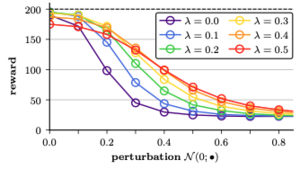
Robustness and generalization in quantum reinforcement learning via lipschitz regularization
SCIM MILQ: An HPC Quantum Scheduler
Uncertainty-based fingerprinting model monitoring for radio localization
